
“You should really…”
“Well, that’s not how I did it.”
“You turned out just fine.”
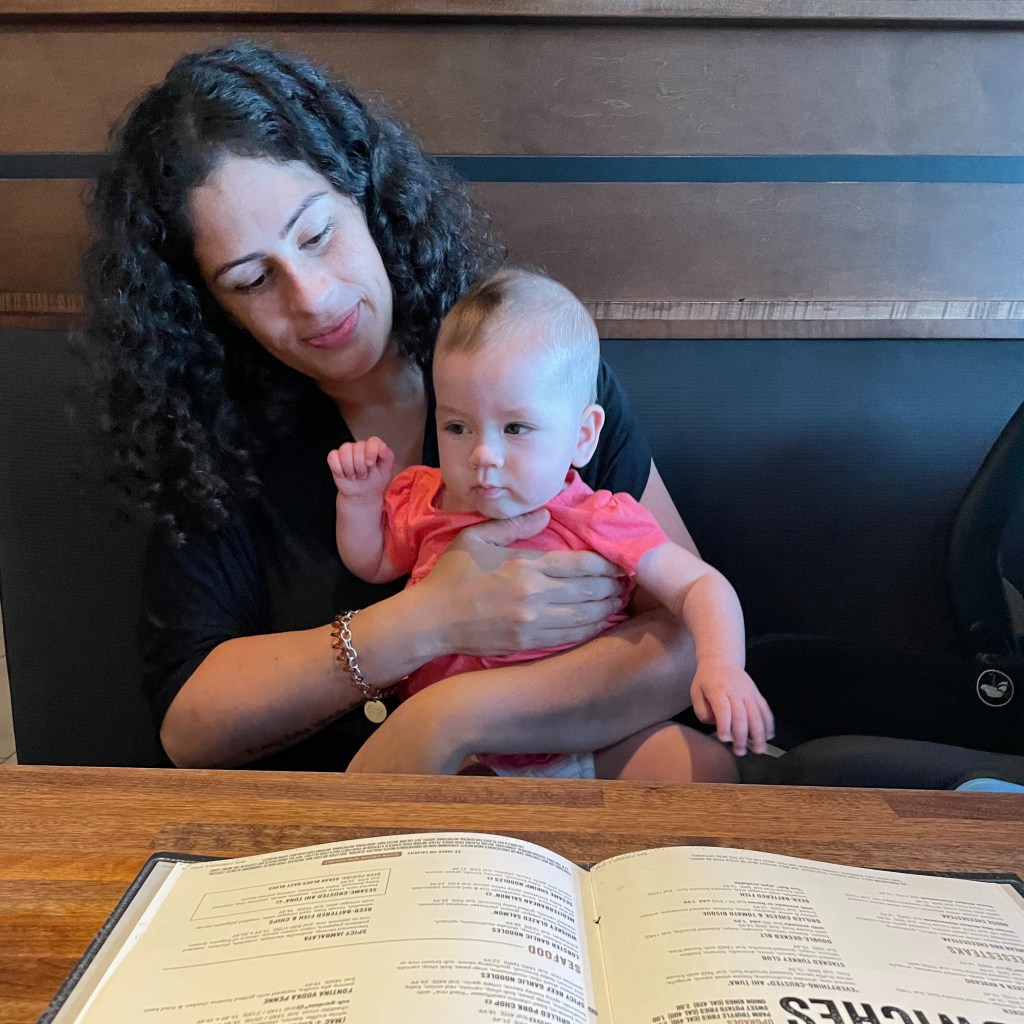
No one prepares you for the barrage of unsolicited opinions you receive about how you should raise your child. For me, it was everything from how my daughter should dress to when she should get baptized.
All I really wanted someone to ask was, “What do you want for your daughter? How can we support you in carrying that out?”
Naive, wishful thinking? Maybe. But the beauty in creating and/or parenting a human life is that you get the precious gift of cultivating who that little miracle becomes. You get to decide your parenting style, family values, and the issues you’ll die on the hill for. That is your right as a parent. But arguably one of the most agonizing initiations is communicating boundaries with your parents and sitting in the discomfort of how family dynamics may shift.
Boundaries are expressions of self-love and self-worth that keep you physically and psychologically safe, and they come with a deep knowledge of what serves you and what doesn’t. Boundaries allow you to live authentically and connect with others in a way that honors and respects our needs.
That’s not to say boundaries will always be well-received—especially if you’re a recovering people pleaser and have never been one to set boundaries. But you are not responsible for how someone responds to a boundary. It is not your responsibility to fix, save, or manage someone’s feelings. They must process their own emotions. You must release the outcome.
That said, there is a mindful way to communicate boundaries around our children to help foster understanding and connection.
Get clear on your non-negotiables
When discussing how my husband and I wanted to raise our daughter, we aligned on how we wanted our daughter to feel—loved, safe, empowered, and resilient. Satisfying her core needs was above all else. Some of my non-negotiables were her physical and emotional safety, sovereignty over her body, and fostering intrinsic self-worth, trust, and confidence.
If you have a partner, have a conversation about values so that you can both bring your perspectives to the table and align on what you will, together, most hold firm to. You can feel differently, but must agree to uphold what your family’s fundamental non-negotiables will be.
Identify where there’s room for flexibility
You will have opinions on everything, of course. But be open to the idea that your parents and the people you love most will each have some nugget of wisdom to share with your child, a different way of doing or thinking about things that will further your child’s growth.
You may not always agree with them, but where can you surrender and trust that the fundamental values you’ve instilled in your child are there? That even if they’re taught a different way of doing things that they’ll still be OK? Where are areas you can invite input or new ways of thinking?
Advocate for your boundaries—you can do this
When setting a lovingly firm boundary with your parents, speaking to the why behind a boundary (i.e., what are you trying to instill and why do you care about it so deeply?) is an opportunity for connection. Candidly, sometimes this may open the door to a productive conversation, and other times, you may have to accept that you and your parents will have a difference of opinion, but that your boundary still holds.
“[Y]ou are not responsible for how someone responds to a boundary. It is not your responsibility to fix, save, or manage someone’s feelings. They must process their own emotions.”
Below is a framework for boundary-setting to get you started as you grow your confidence.
“It’s important to me/us that you [insert desired action]. I/we want to [desired outcome for child and/or value]. We ask that you please [insert boundary]. I/we appreciate your support in being a united front on this issue.”
For example: “It’s important to us that you respect when Olivia says “no” to physical touch. We want to foster body autonomy and consent, so we ask that you do not force hugs or kisses if she’s not open to receiving them. We appreciate your support in showing Olivia her voice matters.”
In an ideal world, your parents say, “Yes, of course” or even “I’ll try.” If they don’t honor your ask, you must decide on what upholding your boundary may look like (e.g., limiting communication or removing yourself from the situation). Remember: You are your child’s fiercest advocate. How you support them now will inform their sense of self-worth, self-trust, and agency in the world.
Originally appeared in Golden Gate Mothers Group Magazine.
 Mama Brain